Crack sealing runs a couple of dollars a linear foot, while cutting out and replacing that same failed section four winters later can run nine or ten dollars a square foot, and a failure is never one tidy square foot. That spread is the whole argument for any landlord who owns pavement. Say the property is a 12-tenant retail strip with a 40-space lot and roughly $8,000 a year budgeted for pavement work. One ignored winter at the entrance apron can eat that budget twice over. Owners who run the numbers tend to schedule asphalt repairs nashville tn in the spring, before tenants start emailing weekly about the hole by the front door. The argument here is plain: patching failed sections on a cycle and sealing the lot behind them costs a fraction of the full-depth reconstruction that deferral eventually forces.
One Winter Turns A Hairline Crack Into A Hole
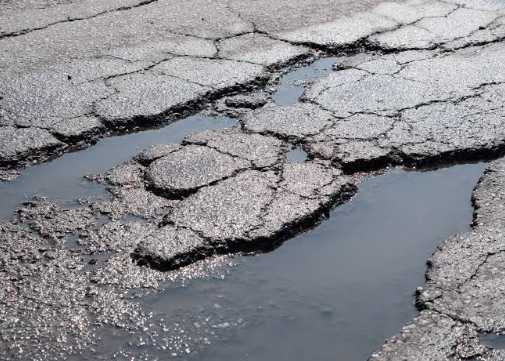
The failure we see most often starts at the entrance apron rather than out in the middle of the lot, because delivery trucks turn there while they are still under load. A hairline crack opens. Water gets under the edge and goes to work all winter, freezing, expanding, and prying the aggregate apart a fraction of an inch at a time. By March the base underneath is saturated, traffic pumps the fines up through the crack, and the surface has nothing left holding it from below. The wheel-swallowing hole your tenants are complaining about was announced a full year earlier by a crack you could have sealed for the price of one service call.
See also: CKDVorscak: Tech Tips and Life Hacks
Patching Costs Against Full Depth Replacement
Price the same 300-square-foot failure at four stages and the escalation speaks for itself. Sealing the joints around it might be $600 on a small mobilization; a surface patch at roughly $4 a square foot is about $1,200; full-depth removal and replacement at $9 or $10 puts you near $2,900. Let the base go soft under the whole drive aisle and you are not buying a patch at all, you are buying reconstruction across 14,000 square feet, which at even $6 a foot is $84,000 against an $8,000 annual budget. Treat those as an illustrative scenario rather than a quote, but the shape of the curve holds on almost every commercial lot in Middle Tennessee.
Ten years ago the pricing conversation was mostly about material. Liquid asphalt moved, sealer moved, and a contractor’s number tracked those barrels fairly closely. Today labor, insurance and crew availability drive more of the bid than the drum does, which is why quotes for asphalt repairs Nashville TN owners collect in February often come in under the same scope priced in October, when every crew in the region is booked solid and mobilization gets expensive.
Deferred Repairs Move The Bill To Next Year
Deferral is not really a pavement problem, it is a reserve problem, and property owners as a group are bad at reserves. An August 2026 analysis from IndexBox, working from late-2025 reserve study data, reported that 74% of homeowner associations were funded at less than 70% of a fully funded reserve balance, which is another way of saying most of them cannot pay for a major repair without a special assessment. HOAs are not strip centers, and the two ownership structures barely rhyme. Still, the mechanism is identical to the one that catches a landlord: the annual number looks affordable, the deferred number does not, and nobody learns which is which until the estimate lands on the desk.
Ignoring the bill does not cancel it. It only indexes it.
What The First Month Of Repairs Looks Like
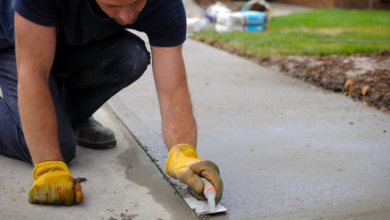
A scheduled repair cycle disrupts a center far less than most owners expect. In the first week a crew marks the failed areas, sets cones, and works one section at a time so the lot never closes completely; saw-cutting and full-depth patching on a 40-space lot is usually a one or two day operation. Patches want roughly a month to cure before sealer goes over them, so by month two you are sealing and re-striping, and within 90 days the lot is back on a maintenance schedule instead of an emergency one. Tenants notice fresh striping far more than they notice the patching, which is worth knowing when you write the notice email.
Until that hole is actually repaired, cone it, barricade it, and keep it lit after dark. That is not optional politeness. OSHA’s walking-working surfaces rule at 29 CFR 1910.22(d)(2) requires hazardous conditions to be corrected immediately, and where an immediate repair is not possible, the surface must be guarded so nobody uses it until the correction is made. Accessibility questions, striping layout, and whether a given repair pulls anything else in your local code into play belong with the city building or code office rather than a contractor’s opinion or mine, because those rules vary by jurisdiction. Ask before the work is scheduled, not after.
Budget The Small Fix Or Fund The Big One
An $8,000 annual pavement line is real money on a 12-tenant center, and it is also roughly what one ruined drive aisle costs to rebuild after four seasons of nothing. Spent on a cycle, it buys crack sealing every year, patching while the base is still sound, and a sealcoat with fresh striping every second or third season. Spent reactively, it buys one emergency and a longer conversation with the bank about the rest of the lot. The decision is really about which year you want the bill in, and the earlier year is always the cheaper one.