
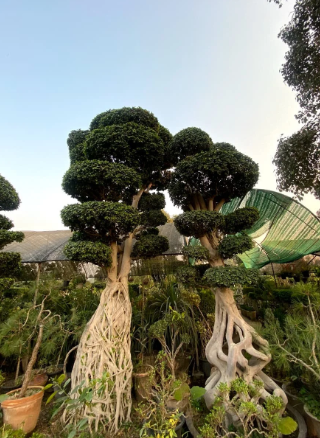
Large ornamental trees can transform an ordinary outdoor space into an impressive landscape, particularly when they combine mature size with an unusual natural structure. An aerial roots ficus bonsai offers exactly this combination, featuring the distinctive exposed-root appearance associated with Ficus microcarpa and a carefully trained multi-tiered canopy. Wulala Garden’s 4.5-meter specimen is designed for premium outdoor environments such as luxury gardens, resorts, golf courses, botanical gardens, and commercial landscape projects.
A Natural Structure With Artistic Character
The aerial roots are one of the most recognizable characteristics of this type of Ficus. Instead of having a conventional trunk that begins entirely below the soil surface, aerial roots develop above the ground and contribute to the tree’s substantial trunk structure.
On the Wulala Garden specimen, these roots are cultivated and developed into a strong, multi-root structure. Combined with the layered canopy, they create a banyan-inspired appearance that gives the tree an architectural quality. This makes it useful when landscape designers need a plant that can function as more than background greenery.
The result is a living focal point that can introduce height, texture, and visual depth into a carefully planned outdoor setting.
Designed for Large-Scale Landscapes
A 4.5-meter tree naturally has a different role from a small tabletop bonsai. Its substantial height and canopy make it particularly suitable for larger landscapes where a strong vertical element is required.
Wulala Garden identifies villas, luxury estates, resorts, golf courses, urban parks, botanical gardens, and other large-scale landscape projects as suitable applications. In hospitality environments, the tree can be used around entrances, garden paths, outdoor relaxation areas, or prominent open spaces where visitors can appreciate its unusual structure.
For residential landscaping, it can serve as a central feature in a courtyard or garden. Its layered foliage and sculptural roots can help create a mature, established appearance without relying on numerous smaller decorative plants.
Evergreen Appeal Throughout the Year
Another useful characteristic of Ficus microcarpa is its evergreen foliage. The Wulala Garden product features dense, glossy green leaves intended to maintain a fresh appearance throughout the year in suitable growing conditions.
This consistency can be valuable for commercial landscapes. Hotels, resorts, and luxury properties often need outdoor areas to maintain a polished appearance across different seasons. An evergreen tree can provide a stable foundation for the landscape while flowering or seasonal plants are used to introduce additional color.
The dense canopy can also contribute to the visual impression of shade and enclosure, making the tree suitable for outdoor relaxation areas and garden compositions.
Professional Pruning and Canopy Training
The appearance of a mature bonsai tree is not simply the result of natural growth. Training and pruning can influence the structure of the trunk, branches, and canopy over many years.
According to Wulala Garden, its large Ficus bonsai trees are carefully pruned and trained by bonsai specialists. The 4.5-meter tree is developed with a multi-tiered canopy while the aerial roots are allowed to mature into the strong trunk structure associated with the species.
This professional shaping gives landscape designers a more refined starting point than an untrained tree. Wulala Garden also states that canopy shapes can be customized upon request, which can be useful when a project has specific visual requirements.
Climate and Placement Considerations
Although Ficus microcarpa is adaptable, selecting the correct growing environment remains important. Wulala Garden identifies tropical and subtropical zones with warm and humid conditions as particularly suitable for this large Ficus bonsai. The product information recommends full sun, with at least six hours of direct sunlight each day, for successful outdoor planting.
Watering should also be adjusted according to establishment and season. Newly transplanted trees require more frequent watering while the root system becomes established, whereas mature specimens generally require less frequent irrigation. Soil should remain adequately moist without becoming waterlogged.
These requirements should be considered before selecting the tree for a landscape project.
A Strong Choice for Premium Outdoor Design
A mature Ficus bonsai can provide more than greenery. Its unusual root development, sculpted canopy, substantial height, and evergreen foliage can give an outdoor environment a distinctive identity.
For luxury residential properties, resorts, golf courses, botanical gardens, and commercial developments, the 4.5-meter Ficus microcarpa from Wulala Garden can serve as a statement tree and central landscape feature. Its trained structure allows designers to introduce an artistic element while retaining the natural character of a living tree.
See also: How Strategic Protection Ensures Growth and Stability in Fitness Businesses
Long-Term Landscape Value
Successful landscape design often depends on selecting plants that remain visually valuable after installation rather than choosing only for immediate appearance. A well-trained aerial-root Ficus can develop greater character as its root structure and canopy mature.
With suitable sunlight, watering, soil conditions, and periodic pruning, Ficus microcarpa can become a lasting component of a tropical or subtropical landscape. Wulala Garden presents its large Ficus bonsai as a resilient, long-lasting option for premium outdoor applications.
For designers and property owners seeking a dramatic natural centerpiece, an aerial roots ficus bonsai combines horticultural character with carefully developed bonsai artistry. Its sculptural roots and layered evergreen canopy make it an effective way to create an outdoor landscape that feels established, distinctive, and visually memorable.


