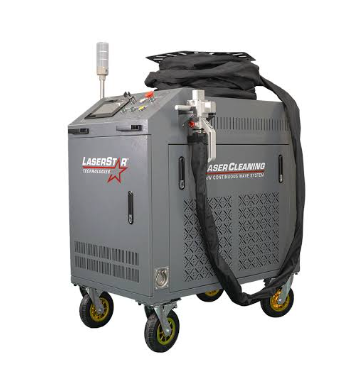
Industrial equipment, steel structures, and manufactured components often accumulate rust, paint, oxidation, and other contaminants that affect their performance and appearance. A cw laser cleaning machine offers an advanced approach to removing unwanted surface layers through controlled laser energy. Using continuous-wave laser technology, these machines are particularly useful for industrial applications that require efficient cleaning across larger areas, helping businesses improve surface preparation and streamline maintenance operations.
What Is a CW Laser Cleaning Machine?
CW stands for continuous wave, describing a laser that delivers energy continuously while operating rather than in separate pulses. The concentrated beam interacts with contaminants on a surface, generating heat that can help loosen, break down, or remove unwanted materials.
Depending on the laser power, operating settings, contaminant, and base material, the process can remove rust, oxide layers, paint, grease, and certain industrial residues. The equipment is commonly used on metal components and structures that require thorough preparation before welding, coating, painting, or further manufacturing.
Unlike traditional abrasive cleaning, laser cleaning does not rely on sand or other blasting media. It can also reduce the need for chemical cleaning agents, although suitable fume extraction and waste management may still be necessary.
Key Advantages of Continuous-Wave Laser Cleaning
Businesses consider continuous-wave laser technology because it can combine high cleaning productivity with flexible operation.
1. Efficient contaminant removal
Continuous laser output can support rapid removal of stubborn surface contamination. This makes the technology attractive for applications involving extensive rust, industrial coatings, and oxidation on suitable materials.
2. Reduced consumable requirements
Conventional methods may require abrasive media, chemical solutions, or frequent replacement materials. Laser cleaning can reduce dependence on these consumables, potentially simplifying purchasing and waste-handling processes.
3. Non-contact processing
The laser beam cleans without direct mechanical contact between a cleaning tool and the workpiece. This can reduce mechanical wear associated with brushing or grinding, although incorrect laser settings may still damage the underlying surface.
4. Flexible operating options
Depending on the model, a CW laser cleaning machine may support handheld operation or integration into a more structured production process. This flexibility allows manufacturers to select equipment suited to workshop maintenance, fabrication, or larger industrial cleaning tasks.
5. Improved workflow consistency
With suitable parameters and operator training, laser cleaning can deliver repeatable results. Consistent surface preparation is valuable when components must meet specific requirements before coating, bonding, or welding.
Common Industrial Applications
CW laser cleaning machines serve a range of industries where surface condition affects product quality, maintenance, and manufacturing efficiency.
See also: How Strategic Protection Ensures Growth and Stability in Fitness Businesses
Rust and Oxide Removal
Steel plates, structural beams, machinery, and fabricated components can develop corrosion during storage or use. Laser cleaning can remove rust and oxidation from compatible surfaces, helping prepare them for inspection, refinishing, or protective coatings.
Paint and Coating Stripping
Removing old coatings is often necessary when refurbishing machinery or preparing metal products for repainting. Laser parameters must be selected carefully to avoid overheating the substrate or damaging nearby materials.
Welding Surface Preparation
Rust, oil, and oxide contamination can interfere with welding and related manufacturing processes. Laser cleaning can prepare designated areas before welding, helping manufacturers establish a cleaner starting surface.
Machinery and Industrial Maintenance
Production equipment and metal components may accumulate grease, residues, and other deposits. Depending on the contaminant and substrate, laser cleaning can support maintenance operations while reducing reliance on mechanical scrubbing.
Steel Structures and Heavy Industry
Fabrication facilities, shipyards, infrastructure contractors, and equipment manufacturers often need to clean large metal surfaces. High-power continuous-wave systems may be suitable for these demanding applications when testing confirms the required cleaning performance.
How to Choose the Right Machine
Selecting the right equipment requires more than comparing laser power ratings. Businesses should evaluate the actual cleaning task and the operating conditions.
First, identify the material being cleaned, whether carbon steel, stainless steel, aluminum, or another compatible substrate. Different materials respond differently to laser energy, so testing is essential.
Next, determine the type and thickness of contamination. Light surface oxidation may require different settings from heavy corrosion or multiple coating layers. The required cleaning width and production speed should also influence the decision.
Cooling requirements, electrical supply, fiber cable length, portability, and operator comfort are other important considerations. For continuous production, confirm the machine’s duty cycle and cooling capacity rather than assuming that every model supports uninterrupted operation.
Finally, ask the supplier about available configurations, maintenance requirements, warranty coverage, training, and technical support. A sample cleaning test can help establish whether the proposed equipment meets the project’s surface-quality and productivity targets.
Safety and Maintenance Considerations
High-power lasers require strict safety controls. Operators should receive appropriate training and follow the manufacturer’s procedures. Depending on the laser classification and work environment, protective measures may include an enclosed laser area, suitable wavelength-rated protective eyewear, access controls, warning indicators, and interlocks.
Cleaning may also generate hazardous fumes or airborne particles, particularly when removing paint, coatings, oils, or unknown residues. Appropriate extraction and filtration should be selected after assessing the materials involved.
Routine maintenance is equally important. Inspect protective lenses, cooling systems, fiber connections, and cleaning heads according to the manufacturer’s instructions. Keeping the equipment clean and operating within specified conditions can help maintain reliable performance.
Conclusion
A CW laser cleaning machine can be a valuable investment for manufacturers and maintenance teams that need efficient rust removal, coating stripping, and industrial surface preparation. Its continuous energy output makes it particularly attractive for suitable large-area and heavy-duty cleaning tasks. By evaluating the substrate, contamination, productivity requirements, safety measures, and machine specifications, businesses can select a system that supports dependable cleaning performance and a more streamlined industrial workflow.