Maintaining effective hand hygiene in commercial facilities requires equipment that is reliable, easy to use, and simple to maintain. A well-designed manual soap dispenser can provide a practical solution for hotels, offices, restaurants, schools, healthcare facilities, and other high-use environments. Unlike powered alternatives, manual dispensers operate through a straightforward push mechanism, making them suitable for locations where simplicity, dependable operation, and easy maintenance are important considerations.
Simple Operation Without Power Requirements
One of the main advantages of a manual soap dispenser is its straightforward operating system. Users activate the dispenser by pressing the mechanism, allowing a controlled amount of soap to be released for handwashing. Because the system does not require batteries or an electrical connection, installation can be easier and ongoing power-related maintenance can be avoided.
This makes manual models particularly useful for businesses that want dependable hygiene equipment without adding another powered device to their restroom infrastructure. For facilities with multiple bathrooms, choosing equipment with simple operating requirements can also make routine management more convenient.
Designed for Commercial Environments
Commercial restrooms experience considerably more use than typical residential bathrooms. Dispensers therefore need to withstand frequent operation while remaining easy for maintenance teams to manage.
CDWK’s soap dispenser range is designed for commercial and public environments, with durable ABS construction, practical capacity options, and features intended for frequent use. The company identifies hotels, hospitals, airports, offices, schools, restaurants, shopping centers, and other commercial facilities as relevant application environments.
Durability is particularly important when equipment is installed in busy public facilities. A dispenser that can handle repeated daily use can help reduce the need for frequent replacement and contribute to more consistent restroom operations.
Flexible Dispensing Options
Different facilities may have different preferences regarding the type of hygiene product they use. Depending on the selected configuration, CDWK soap dispensers can support liquid, foam, or spray dispensing. This flexibility allows buyers to select a configuration according to their specific application rather than being limited to a single dispensing format.
For example, liquid soap may be appropriate for a conventional handwashing area, while foam can provide a different user experience. Spray dispensing may also be suitable for particular sanitizing applications. Selecting the correct pump configuration is therefore an important part of planning a commercial restroom.
Capacity and Maintenance Efficiency
Restroom maintenance involves more than cleaning. Staff must also monitor consumables and refill dispensers before they become empty. A dispenser with practical capacity and a visible liquid-level window can make this process easier.
CDWK highlights large-capacity designs and visible windows as features that help maintenance personnel monitor remaining contents and reduce unnecessary refill frequency.
For facilities with numerous restrooms, even small improvements in maintenance efficiency can become significant over time. Staff can identify which dispensers need attention without opening every unit, helping streamline routine inspection rounds.
Wall-Mounted Designs Save Space
Wall-mounted dispensers are another practical choice for commercial washrooms. Installing the dispenser on the wall keeps countertops and other surfaces clear while creating a consistent location for handwashing supplies.
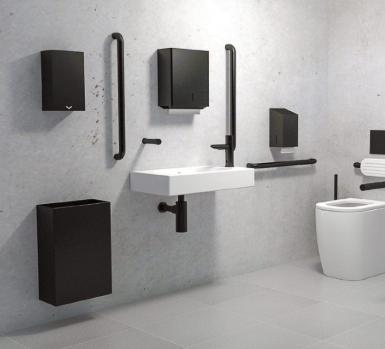
This can be especially useful in compact bathrooms or high-traffic environments where efficient use of available space is important. Wall-mounted installation can also contribute to a more organized appearance, particularly when several restroom accessories are installed together.
Security and Controlled Access
Commercial facilities may also need to control access to refill containers. A lockable dispenser design can help reduce unauthorized opening and unnecessary handling of the internal components.
This feature can be useful in public locations where many different people use the same restroom. Combined with a visible window and straightforward refill process, it gives maintenance personnel better control over everyday dispenser management.
Suitable for Different Business Applications
The versatility of manual dispensers makes them suitable for a wide variety of facilities. Hotels can use them to provide consistent bathroom amenities, while offices can install them in employee washrooms. Restaurants and schools can also benefit from simple handwashing equipment, while healthcare and public facilities may require larger-scale restroom hygiene solutions.
CDWK’s broader commercial restroom portfolio includes soap dispensers alongside paper dispensers, hand dryers, waste bins, air freshener dispensers, and other hygiene products, allowing businesses to coordinate multiple restroom components from one supplier.
See also: How Strategic Protection Ensures Growth and Stability in Fitness Businesses
Conclusion
A manual soap dispenser offers a combination of simplicity, durability, flexible dispensing, and convenient maintenance that makes it well suited to many commercial environments. Its power-free operation eliminates battery requirements, while wall-mounted designs, practical capacity, visible refill levels, and lockable structures can support efficient restroom management. For businesses seeking dependable hygiene equipment, selecting a dispenser according to traffic levels, soap type, installation space, capacity, and maintenance requirements can help create a cleaner and more manageable commercial restroom.