If you have just bought your first turntable, you may have come across a small box that everyone insists you need: a phono stage. It is not the most glamorous part of a hi-fi system, and it is easy to wonder whether it is really necessary. The short answer is yes. Without a phono stage, your records will sound faint, thin and strangely tinny. This guide explains what a phono stage does, why vinyl needs one, and how it fits into your system.
Why Records Need a phono stage
A turntable cartridge produces a very weak electrical signal, far weaker than the signal from a CD player, a streamer or a phone. That signal is only a few thousandths of a volt, and it needs to be boosted considerably before an amplifier can work with it. A phono stage provides that boost, raising the cartridge output to the standard line level that the rest of your system expects.
There is a second job, and it is just as important. When records are cut, the bass is deliberately reduced and the treble is boosted. This is known as the RIAA equalisation curve, and it exists so that grooves can be cut narrowly enough to fit a whole album side onto a record. A phono stage reverses this curve, restoring the bass and taming the treble so the music sounds as the artist intended. Without this correction, a record would sound bright, harsh and almost entirely lacking in low end.
Built-In or Separate: Which Do You Have?
Many modern turntables include a built-in phono stage, sometimes labelled as a phono stage, and many amplifiers include a dedicated phono input. If either is present, you already have a phono stage in your chain. The question is whether it is good enough for your ears.
Built-in stages are convenient, and they are perfectly fine for getting started. They are usually designed to a budget, though, and they can be a weak link once the rest of your system improves. A separate phono stage gives you a dedicated circuit, better components and usually lower noise, which translates into a cleaner, more detailed sound. Many listeners find that adding a separate phono stage is the single most cost-effective upgrade they can make to a vinyl setup.
How a phono stage Fits Into Your System
The signal path is simple. The turntable connects to the phono stage, and the phono stage connects to a line-level input on your amplifier, such as AUX, CD or Line. You must never connect a turntable directly to a line input without a phono stage in between, or the sound will be barely audible and badly unbalanced.
If your amplifier already has a phono input, that input contains its own phono stage. In that case, you should use either the amplifier’s phono input or a separate phono stage connected to a line input, never both at once. Running the signal through two phono stages will overload the sound and produce heavy distortion.
Moving Magnet and Moving Coil Cartridges
Cartridges come in two main types, and your phono stage needs to suit the one you own. Moving magnet cartridges are the most common, especially on affordable and mid-range turntables. They produce a stronger signal and work with almost every phono stage. Moving coil cartridges produce a much weaker signal and need a phono preamp with extra gain, so they are usually found on higher-end systems.
Most separate phono preamps support moving magnet cartridges, and many also support moving coil, either through a switch or through adjustable gain settings. If you own a moving magnet cartridge, which most beginners do, almost any phono preamp will work for you.
5 Signs You Need a Phono Preamp
- Your turntable sounds very quiet: the volume is far lower than your other sources.
- The sound is thin and tinny: bass is missing and treble sounds harsh.
- Your amplifier has no phono input: there is nowhere to plug the turntable in directly.
- You are using a line input: the turntable is connected to AUX or CD and sounds wrong.
- You want better sound: your built-in stage works, but the music lacks detail and warmth.
Choosing Your First Phono Preamp
When you buy your first separate phono preamp, keep it simple. Look for one that matches your cartridge type, offers solid build quality, and comes from a maker with a good reputation in hi-fi. Features such as adjustable gain and switchable capacitance are useful, but they are not essential for a first purchase. What matters most is a quiet, clean circuit that lets the music through without adding noise or colouration.
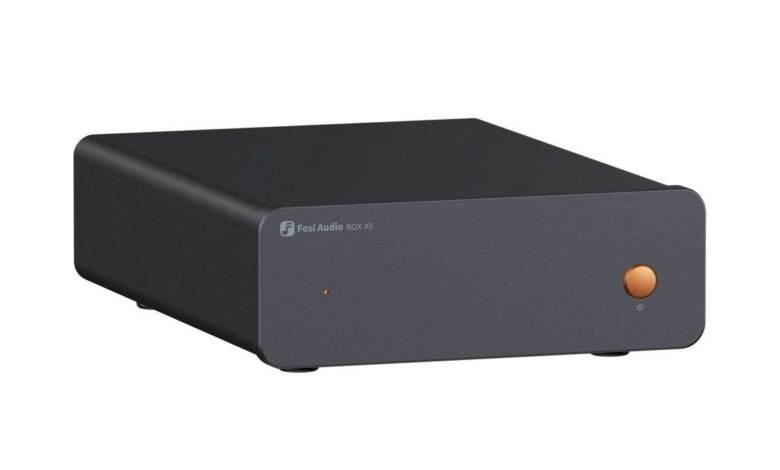
Size and appearance are worth considering too. A small, well-built phono preamp can sit neatly beside your turntable without dominating your shelf, and many affordable models now offer performance that would have cost far more a decade ago.
Frequently Asked Questions
Do all turntables need a phono preamp?
Yes, every turntable needs one. Some have it built in, and some amplifiers include one, but the signal always has to pass through a phono stage before it can be amplified properly.
Can I use a phono preamp with powered speakers?
Yes. Connect the turntable to the phono preamp, then connect the phono preamp to the line input on your powered speakers. The speakers provide the amplification, and the phono preamp handles the cartridge signal.
Is an expensive phono preamp worth it?
It depends on the rest of your system. A good affordable phono preamp will transform a basic setup, while a very expensive one only shows its worth when the turntable, cartridge and speakers are all of matching quality.
See also: How CAD to BIM and Architectural BIM Services Are Transforming Modern Construction
Final Thoughts
A phono preamp is a small box with a big job. It lifts the tiny signal from your cartridge up to a usable level and restores the tonal balance that the record-cutting process deliberately alters. Whether it is built into your turntable, built into your amplifier or sitting in a separate box on your shelf, it is the component that makes vinyl sound like vinyl. Choose one that suits your cartridge, connect it correctly, and your records will finally sound the way they were meant to.