A great home theater does not have to cost a fortune. With careful choices and a clear plan, you can put together a system that fills the room with clear dialogue, deep bass and the kind of detail that makes films feel alive. The secret is knowing where to spend and where to save, and the amplifier is one of the parts of the chain where a modest, well-chosen unit can make a real difference to the whole experience.
Start With the Room, Not the Gear
Before buying anything, look at the room itself. A home theater lives or dies on its space. A smaller room needs less power and fewer speakers to sound full, while a large open-plan living area asks more of every component. Soft furnishings, curtains and rugs calm reflections and help dialogue stay intelligible, while bare walls and hard floors can make even good equipment sound harsh.
Seating position matters too. Sit roughly as far from the screen as the screen is wide, and keep the main speakers at ear height when you are seated. These simple choices cost nothing and improve the result more than any single upgrade. Once the room is understood, the rest of the system falls into place around it.
The Amplifier Is the Heart of the System
Every sound in a home theater passes through the amplifier, so it deserves attention. The amplifier takes the quiet signal from your source, a streaming box, a disc player or a games console, and gives it the power to drive the speakers. A weak or noisy amplifier will hold back good speakers, while a clean, capable one lets them perform at their best.
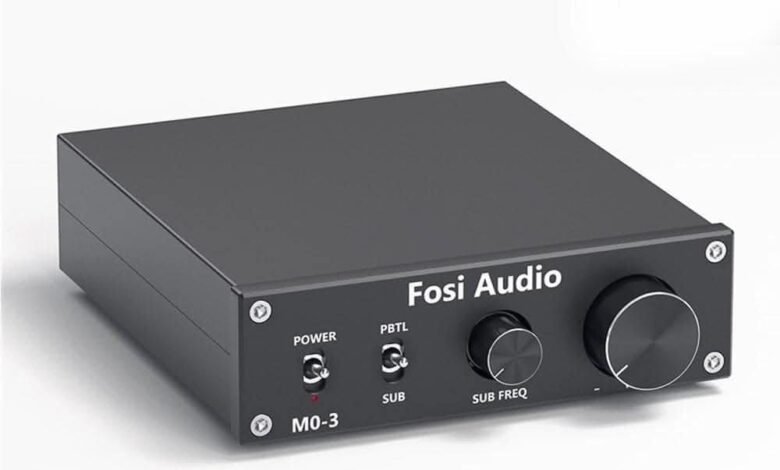
For a budget home theater, a compact stereo amplifier can be an excellent starting point, especially if you begin with two speakers and add a centre channel or a subwoofer later. Many listeners build their system in stages, and a good amplifier makes that approach work, because it will still be doing its job well when the rest of the system grows around it.
Choosing Speakers That Match
Speakers and amplifiers work as a pair, so they should be chosen together. The key figure to check is sensitivity, which tells you how loud a speaker plays with a given amount of power. Efficient speakers need less power to fill a room, which is good news for a budget build, because a smaller amplifier can drive them comfortably.
Also check impedance, which is measured in ohms. Most home speakers are rated at four, six or eight ohms, and your amplifier should be comfortable driving the load your speakers present. A mismatch here can make the amplifier run hot or sound strained at higher volumes, so a quick check of both specifications before you buy saves trouble later.
See also: How CAD to BIM and Architectural BIM Services Are Transforming Modern Construction
Sound Sources and Connections
A modern home theater usually has several sources: a television, a streaming device, a games console and perhaps a disc player. Your amplifier needs enough inputs for all of them, and the right kind of inputs. Optical and coaxial digital inputs are common for televisions, while analogue RCA inputs suit older equipment and turntables with a separate phono stage.
Bluetooth is a handy addition for casual listening, letting you play music from a phone without extra cables. Some amplifiers also include a dedicated subwoofer output, which makes adding deep bass straightforward later on. Planning your connections in advance avoids the frustration of a missing input after everything is set up.
5 Ways to Stretch a Home Theater Budget
- Buy in stages: start with two speakers and an amplifier, then add a centre speaker and subwoofer later.
- Choose efficient speakers: they need less power, so a smaller amplifier is enough.
- Treat the room first: curtains, rugs and soft furniture improve sound for free.
- Keep cables simple: good quality, sensibly priced cables are all you need.
- Set it up carefully: speaker placement and seating position cost nothing and matter enormously.
Getting the Bass Right
Bass gives films their weight, from the rumble of a storm to the thud of a closing door. A subwoofer handles the lowest frequencies, freeing the main speakers to focus on dialogue and detail. If your amplifier has a subwoofer output, connection is simple, and the crossover setting lets you decide where the subwoofer takes over from the main speakers.
Placement matters as much as the subwoofer itself. Try the subwoofer in different corners of the room, because the same unit can sound boomy in one spot and tight in another. A little experimentation at this stage pays off every time you watch a film.
Frequently Asked Questions
Do I need a surround sound receiver for a home theater?
Not necessarily. A surround receiver suits a full multi-speaker setup, but a good stereo amplifier with two quality speakers can deliver a very satisfying home theater experience, and you can expand the system later.
How much power does a home theater amplifier need?
It depends on your room and your speakers. Efficient speakers in a modest room need surprisingly little power, while large rooms and demanding speakers ask for more. Matching the amplifier to the speakers matters more than chasing the biggest number.
Can I use a stereo amplifier with my television?
Yes, in most cases. Connect the television to the amplifier with an optical cable or an analogue output, and the television’s sound will play through your speakers instead of its built-in ones, which is usually a large improvement.
Final Thoughts
Building a home theater on a budget is about balance: a room you understand, speakers that suit it, and an amplifier that ties the system together. Spend where it counts, buy in stages, and take time over setup. The result is a home theater that makes every film night feel like an occasion, without an occasion-sized bill.