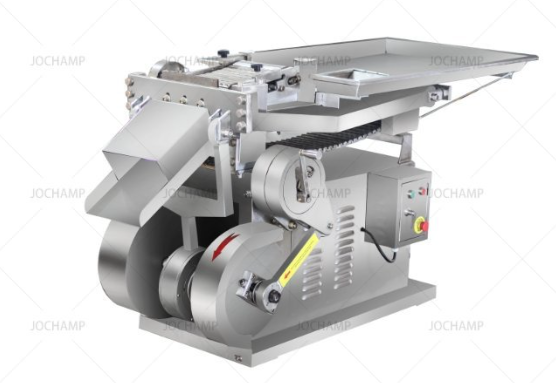
Efficient tobacco processing requires precision, consistency, and reliable equipment. A Tobacco Cutting Machine is an important part of the shisha tobacco manufacturing process because it converts whole or partially processed tobacco leaves into controlled strips for further processing. By automating the cutting stage, manufacturers can achieve more consistent results while improving production efficiency and reducing repetitive manual work.
What Is a Tobacco Cutting Machine?
A tobacco cutting machine is industrial processing equipment designed to cut prepared tobacco leaves into strips of a specified size. In shisha tobacco production, the cutting stage is particularly important because the size and consistency of the tobacco strips can affect subsequent processing.
After tobacco leaves have been sorted and dried, they can be introduced into a cutting system where specialized blades slice the material into uniform strips. These strips can then move to subsequent stages, such as mixing with molasses and flavoring ingredients.
Shishapack explains that precise cutting helps support the even distribution of flavorings and molasses during later processing.
Why Precise Tobacco Cutting Matters
Uniformity is one of the most important considerations in tobacco processing. When tobacco leaves are cut manually, strip dimensions may vary because of differences in operator technique and cutting pressure.
An automated machine can provide greater control over the cutting process. Adjustable settings allow manufacturers to select an appropriate cutting size according to their product and production requirements.
Consistent strips can also contribute to a more organized downstream process. When the material has a more predictable size and structure, it can be easier to handle during mixing, flavoring, and other production stages.
How Does a Tobacco Cutting Machine Work?
The basic operation begins with feeding whole or partially processed tobacco leaves into the machine. Depending on the configuration, material may enter through a hopper or conveyor system.
The tobacco then moves toward the cutting mechanism. Rotary blades or other specialized knives shear the leaves into strips as they pass through the cutting area. After cutting, an output conveyor or collection system can transport the processed material toward the next production stage.
A typical Shishapack system can include a feeding system, optional pre-cutting mechanism, cutting system, blade cooling, lubrication, output conveyor, sieves or screens, and control panel. These components work together to support stable and continuous processing.
Key Features to Consider
When selecting tobacco cutting equipment, manufacturers should consider several factors. Cutting width is important because different products may require different strip sizes. Production capacity is another consideration, particularly for businesses processing large quantities of tobacco.
Shishapack offers machines with adjustable cutting widths and different capacity categories. Its listed configurations range from approximately 100–200 kg/hour for entry-level equipment to 350–500 kg/hour for high-performance models. The QYJ-200 model is listed with a capacity of 100–400 kg/hour and a cutting length of 2–25 mm.
The exact configuration should be selected according to the customer’s production volume, tobacco characteristics, required cut size, and processing workflow.
Durable Construction and Cutting Components
Industrial tobacco processing equipment needs to withstand continuous operation. Shishapack states that its tobacco cutting machines use food-grade stainless steel for the frame and body, providing durability, corrosion resistance, and easier hygiene management.
The cutting system uses hardened steel or tungsten-carbide blades. Optional titanium or ceramic coatings can also be used to improve sharpness, wear resistance, and blade service life.
Reliable electrical components and motors are another important part of the equipment, helping support stable operation and controlled processing.
Safety and Operator Protection
Because tobacco cutting machines contain moving cutting components, safety features are essential. Modern industrial equipment should provide appropriate protection around moving parts and allow operators to stop the machine quickly when necessary.
The Shishapack machine incorporates protective guards, emergency-stop controls, and sensor systems designed to identify issues such as jams or overloads. The company also states that its machines are designed and tested to comply with relevant EU safety requirements.
Customization for Different Production Needs
Not every tobacco manufacturer has the same requirements. Production capacity, tobacco type, cutting dimensions, feeding method, and downstream equipment can all differ.
Shishapack provides customization beginning with requirement analysis and machine design. Components such as the feeding system, cutting system, blade configuration, and control system can be adjusted according to the production environment. The machines can also be integrated with upstream and downstream equipment for more automated production workflows.
Maintenance and Long-Term Performance
Regular maintenance is important for keeping cutting equipment operating reliably. Routine tasks can include inspecting blades, cleaning the cutting area, checking lubrication systems, and maintaining electrical components.
Proper blade maintenance is particularly important because worn or damaged blades can affect cutting consistency and machine performance. Regular inspection can help manufacturers identify problems before they interrupt production.
See also: How Strategic Protection Ensures Growth and Stability in Fitness Businesses
Conclusion
A tobacco cutting machine can play an important role in modern shisha tobacco processing by improving cutting consistency, production efficiency, and workflow organization. Features such as adjustable cutting sizes, durable construction, specialized blades, automated controls, and safety systems can make industrial processing more reliable.
For manufacturers selecting equipment, the most suitable machine will depend on production capacity, tobacco characteristics, required cutting dimensions, and the broader processing line. With appropriate configuration and regular maintenance, automated tobacco cutting equipment can provide a dependable foundation for efficient shisha tobacco production.