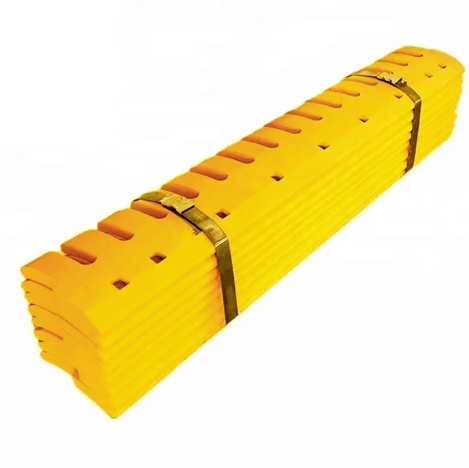
Cutting edges are designed to wear out. That is their job: they take the abuse so the moldboard does not have to. The challenge for operators and fleet managers is knowing when an edge has given all it can. Replace it too early and money is wasted. Replace it too late and the moldboard itself begins to wear, which is far more expensive to repair.
Know the wear limit
Most cutting edges have a practical wear limit, usually defined by how close the worn edge is to the bottom of the moldboard or to the bolt holes. A common rule of thumb is to replace the edge before wear reaches within about an inch of the moldboard or before the bolt heads begin to wear. Manufacturer guidelines and fleet policies may set specific measurements. Marking the wear limit with paint on new edges gives operators a quick visual reference.
Watch the bolt heads
Plow bolts hold the edge to the moldboard. When the edge wears down far enough, the bolt heads start contacting the surface. Once that happens, bolts wear quickly, can loosen, and may become difficult to remove. Worn bolts also risk the edge detaching in operation. If bolt heads show wear, the edge is overdue for replacement.
Check for uneven wear
Edges rarely wear perfectly evenly. One end may wear faster because of blade angle, the side of the road being worked, or operator technique. Uneven wear changes how the blade cuts and can leave crowns or ridges in the work surface. When one end reaches the wear limit, the edge should be replaced or rotated if the design allows it.
Look for cracks and damage
Impact with rocks, curbs, or frozen ground can crack an edge, especially near bolt holes. A cracked edge may break apart in use. Bent or chipped edges also reduce performance. Daily walk-around inspections should include a quick look along the full length of the cutting edge for visible damage.
Watch performance in the field
Operators often notice performance changes before measurements confirm wear. A dull or rounded edge does not cut as cleanly, requiring more passes and more downforce. Material may roll over the blade instead of being cut. Fuel use may rise. These signs suggest the edge is no longer effective even if it has not reached the absolute wear limit.
See Also: How Strategic Protection Ensures Growth and Stability in Fitness Businesses
Protect the moldboard
The moldboard is the costly part. Once the cutting edge wears away, abrasion goes straight into the moldboard, wearing its lower lip and bolt holes. Repairing a moldboard involves welding, rebuilding, or replacement, all of which mean downtime and expense. Timely edge replacement is inexpensive insurance.
End bits matter too
End bits protect the corners of the moldboard and often wear faster than the center edge. Inspect them separately and replace them on their own schedule. Worn end bits expose moldboard corners to damage.
Rotating and flipping
Some cutting edges are double-beveled, allowing them to be flipped to use the other side once the first is worn. Others can be swapped end to end to even out wear. These practices can extend life significantly when done before wear becomes extreme.
Plan replacements around the season
Graders working gravel roads in summer and plowing in winter see heavy use at predictable times. Scheduling edge replacements before busy periods avoids mid-season breakdowns. Keeping a stock of common sizes on hand reduces downtime when replacements are needed unexpectedly.
Track edge life
Recording installation dates, hours of use, and conditions for each machine helps fleets understand how long edges last. Over time, this data reveals which steel grades and profiles perform best for each application and allows better purchasing decisions.
Safe replacement practices
Replacing edges involves heavy parts and stuck bolts. Lower the blade to the ground or support it securely before working. Use proper lifting equipment and wear gloves and eye protection. Clean the moldboard mounting surface before installing the new edge, use new bolts and nuts, and torque them to specification.
Keep the right parts on hand
When an edge reaches its limit, having the correct replacement ready avoids pulling the grader out of service for days. Keep a record of each machine’s moldboard model, edge length, thickness, hole pattern, and preferred steel grade. Store matching bolts and nuts with the edges. Fleets with several grader models benefit from a simple parts chart posted in the shop.
The bottom line
Replacing a motor grader cutting edge at the right time keeps equipment efficient, protects the moldboard, and reduces long-term costs. Regular inspections, attention to bolt head wear, and a clear wear limit make the decision straightforward. Consistent replacement practices turn an inexpensive wear part into one of the most effective ways to protect a grader’s productivity.