Rust, old paint and oxide layers are a constant problem in metal workshops, restoration projects and industrial maintenance. For years, the standard answers were sandblasting, chemical solvents and wire brushes, all of which create dust, waste and surface damage. An air cooled pulse laser cleaning machine offers a cleaner alternative: it removes contamination with focused pulses of light, leaving the metal underneath untouched. This guide explains how the technology works, why air cooling matters, and where it fits best.
How Laser Cleaning Works
An air cooled pulse laser cleaning machine fires short, powerful pulses of laser light onto a dirty metal surface. The contaminant layer, rust, paint, oil or oxide, absorbs the energy and is vaporised or lifted away in tiny particles, while the metal below reflects most of the energy and stays intact. Because the pulses are extremely brief, heat does not have time to soak into the base material, so there is no warping, no change to the metal structure and no abrasive wear.
The operator guides a handheld laser head across the surface, and the cleaned area appears immediately, often in a single pass. The process is dry, contact-free and produces no chemical waste. The removed particles are simply collected by an extraction unit, which keeps the working area clean and safe.
Why Air Cooling Makes a Difference
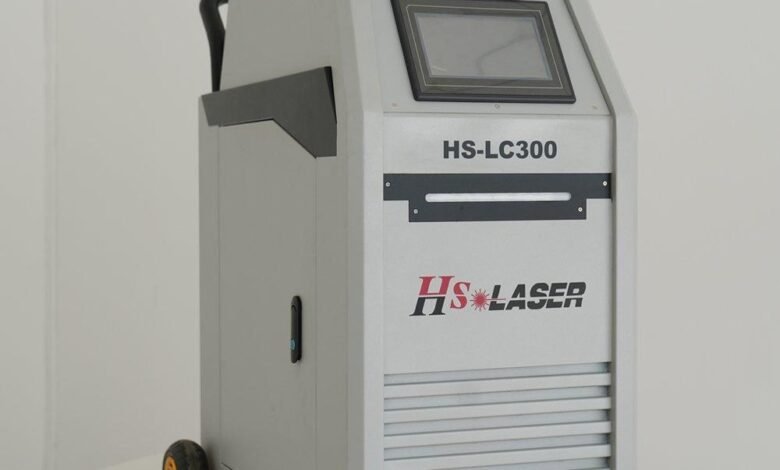
Many industrial laser systems need a water chiller to keep the laser source at a stable temperature. An air cooled pulse laser cleaning machine removes that requirement. Cooling is handled by built-in fans and heat sinks, which makes the machine lighter, simpler and easier to move around a workshop or take to a job site. There is no water to top up, no risk of leaks and no chiller to maintain.
This simplicity also lowers running costs. With fewer parts to service and no cooling water to manage, maintenance is straightforward, and the machine can be ready to work within minutes of being switched on. For small workshops and mobile cleaning services, that ease of use is a genuine advantage.
What an Air Cooled Pulse Laser Cleaning Machine Can Remove
The most common job is rust removal. Steel beams, tools, vehicle parts and machinery that have sat unused quickly develop surface rust, and laser cleaning strips it away without thinning the metal. The same machine handles old paint and coatings, preparing surfaces for repainting or welding without the dust cloud that sandblasting creates.
Oxide layers on welds are another frequent application. After welding, the heat-affected zone often carries a dark oxide film that must be removed before inspection or coating. A pulse laser cleans the weld area precisely, without grinding away good metal. The machine is also used for degreasing, removing oil films from parts before assembly, and for cleaning moulds, where a gentle, non-abrasive method protects the mould surface.
Choosing the Right Machine for the Job
Power is the first thing to consider. Lower-power machines suit light rust and thin coatings on small parts, while higher-power units clean large areas and thick corrosion faster. Pulse frequency and beam width also matter: a wider beam covers ground quickly, while a narrower beam gives finer control on detailed work.
Portability is the second consideration. If the work moves around a factory or goes out to customer sites, a compact air cooled pulse laser cleaning machine with a long fibre cable is far more practical than a fixed installation. Check the weight, the length of the delivery fibre and whether the machine runs on a standard power supply, since these details decide how easily it fits into daily work.
Safety and Standards
Laser cleaning equipment must be used with proper safety measures. Operators wear laser safety glasses rated for the machine wavelength, and the working area should be shielded so that no one else is exposed to reflected light. Machines built to the European standard carry the safety features and documentation that workshops and inspectors expect, including interlocks, emergency stops and clear operating instructions. Buying an air cooled pulse laser cleaning machine that meets these standards protects both the operator and the business.
5 Signs an Air Cooled Pulse Laser Cleaning Machine Is Right for Your Workshop
- You clean rust or paint regularly: repeated cleaning jobs justify the investment quickly.
- You need a dust-free process: laser cleaning suits indoor work and sensitive environments.
- You work with valuable parts: non-contact cleaning protects surfaces that blasting would damage.
- You want low running costs: no abrasives, no chemicals and no water cooling to maintain.
- You need portability: an air cooled unit moves easily between jobs and sites.
Caring for Your Machine
Day-to-day care is simple. Keep the lens and protective window clean, since dirt on the optics reduces cleaning power. Check the air vents and filters regularly so the cooling system works properly, and store the fibre cable without sharp bends. With this basic routine, an air cooled pulse laser cleaning machine will deliver consistent results for years.
Frequently Asked Questions
Is laser cleaning safe for the metal underneath?
Yes, when the settings match the material. The laser energy is absorbed by the rust or coating, while the clean metal reflects it, so the base material is not removed or damaged.
Can one machine remove both rust and paint?
Yes. The same machine handles rust, paint, oxide and oil films. The operator adjusts the power and pulse settings to suit each type of contamination.
Do I need a water supply for an air cooled machine?
No. Air cooling uses fans and heat sinks, so there is no water chiller, no plumbing and no risk of leaks.
Final Thoughts
An air cooled pulse laser cleaning machine brings a modern, clean and precise method to a job that used to be dirty and wasteful. It removes rust, paint and oxide without touching the metal beneath, needs no water cooling and moves easily wherever the work is. For workshops that clean metal regularly, it is a practical upgrade that pays for itself in saved time, saved materials and better results.