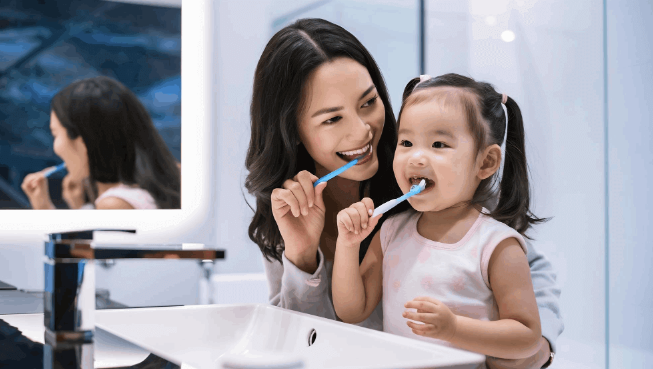
Healthy teeth start in your home. Your child watches you brush, eat, and care for your mouth. Your actions teach stronger lessons than any poster in a clinic. A trusted partner helps you shape those lessons. A dentist in Glen Carbon, IL can guide you, answer hard questions, and back you up when your child resists brushing or fears cleanings. Together you create clear routines. You set simple house rules for snacks, drinks, and brushing. You use kind but firm words that your child understands. You turn short daily moments at the sink into steady habits that last. You also learn what to do when a tooth hurts, a brushing fight starts, or a cavity shows up. With clear support, you do not guess or hope. You lead with calm, your dentist supports your plan, and your child feels safe.
Why early oral habits matter for your child
Tooth decay is common in children. It causes pain, missed school, and trouble eating. The good news is that simple steps at home prevent most problems.
Federal health experts explain that brushing with fluoride, using clean water, and regular checkups protect teeth. You do not need special tools. You need a plan and support.
Think of three main goals.
- Keep teeth clean every day.
- Limit sugar that feeds decay.
- Use your dentist as a coach.
Set simple brushing and flossing routines
Children need clear steps. Long talks do not work. Short, steady actions do.
Use this three-step method.
- Show. Let your child watch you brush and floss.
- Share. Brush side by side at the sink.
- Support. Help your child finish spots they miss.
Follow these brushing rules.
- Brush two times a day for two minutes.
- Use a soft brush with a small head.
- Use a smear of fluoride paste for toddlers and a pea size for older children.
- Spit out paste. Do not rinse with lots of water.
Floss once a day when teeth touch. Many children accept floss picks more than string. You can guide small hands until they gain control.
Use a table to track home habits
A simple chart on the fridge gives structure. You and your child can check progress together.
| Habit | Age to start | Parent role | Child role |
|---|---|---|---|
| Brushing morning | First tooth | Do all brushing at first. Then check and finish. | Hold the brush. Brush front teeth. |
| Brushing night | First tooth | Set timer. Guide slow circles on all teeth. | Follow timer. Try to reach the back teeth. |
| Flossing | Teeth that touch | Floss for the child. | Practice with a floss pick. |
| Water instead of juice | Age 1 | Offer water with meals and snacks. | Ask for water when thirsty. |
| Dental checkup | By first birthday | Schedule and attend every six months. | Bring questions. Show teeth. |
Shape snack and drink choices that protect teeth
Food and drink touch teeth all day. Sugar and acid weaken them. You do not need a strict diet. You need fewer hits of sugar and more water.
Use this simple rule of three.
- Limit juice and soda.
- Offer water between meals.
- Keep sweets with meals, not alone.
The United States Department of Agriculture gives clear guidance on drinks and snacks for children. That guidance supports both health and teeth.
Turn your family dentist into your home coach
Your dentist does more than fix cavities. Your dentist teaches, checks, and supports your home plan. That support matters when you feel tired or unsure.
Use each visit to get three types of help.
- Skill checks. Ask where your child misses spots when brushing.
- Product checks. Ask about brush type, paste, and floss.
- Habit checks. Ask how snacks and drinks affect your child’s teeth.
Your dentist in Glen Carbon, IL can also help you handle fear. Short, clear words work best. You can agree on simple phrases with your dentist before your child sits in the chair. You speak first. Then your dentist uses the same words. This shared script builds trust.
Handle common oral health struggles at home
Every family faces stress around teeth at some point. You can prepare for three common moments.
When your child refuses to brush
- Stay calm. Speak in short, clear sentences.
- Offer two choices. For example, choose a brush color or a song.
- Use a timer. Brush until the timer stops.
- If the fight grows, stop, reset, and try again in a few minutes.
If refusal continues, talk with your dentist. You can plan a brushing lesson during the next visit.
See also: How Cosmetic Dentistry Builds On The Foundation Of Healthy Smiles
When a tooth hurts
- Look for swelling, dark spots, or food stuck between teeth.
- Rinse with warm water.
- Call your dentist for advice. Describe what you see and how long it has hurt.
Do not wait and hope it goes away. Early care prevents worse pain.
When your child fears the dentist
- Talk before the visit without long detail.
- Use simple words like “count teeth” and “clean teeth.”
- Bring a comfort item if the office allows it.
- Plan a calm routine after the visit, such as reading at home.
Work as a team for lasting habits
Strong oral habits grow when home and clinic match. You lead daily. Your dentist guides your plan and checks progress. Your child feels that both home and clinic share the same message.
Focus on three steady steps.
- Keep a clear brushing and flossing routine.
- Offer water and smart snacks most days.
- Use regular dental visits to adjust your plan.
With time, these steps feel normal. Your child learns that mouth care is not a fight. It is a simple part of each day. That quiet strength protects their smile for years.